Grand theft auto ii: Gameplay, Story, Features & Complete Guide

Grand Theft Auto II remains one of the most recognizable classic titles in the history of open-world gaming. Released in 1999, this action-adventure game introduced players to a fictional criminal world filled with rival gangs, dangerous missions, exciting vehicles, and countless opportunities for exploration. Developed by DMA Design and published by Rockstar Games, the game continued the foundation established by the original Grand Theft Auto while introducing several distinctive features that helped shape the franchise’s identity. Its retro-futuristic environment, top-down camera perspective, and unusual gameplay mechanics continue attracting classic gaming enthusiasts.
Although modern Grand Theft Auto installments feature advanced graphics, realistic environments, and cinematic storytelling, the earlier games offer a different kind of entertainment. Grand Theft Auto II focuses on freedom, strategic decisions, criminal activities, and relationships between competing organizations. Players can explore different districts, complete missions, steal vehicles, and build their reputation among powerful gangs. This complete guide explores the game’s history, storyline, characters, gameplay systems, missions, platforms, and lasting legacy, helping both experienced fans and newcomers understand what makes this classic release interesting.
What Is Grand Theft Auto II?
Grand Theft Auto II is an open-world action-adventure game developed by DMA Design and published by Rockstar Games. It is the sequel to the original Grand Theft Auto, which introduced players to a criminal environment where stealing vehicles, completing missions, and exploring large cities formed the foundation of the experience. The sequel expanded these ideas through improved environmental design, additional mission opportunities, and a more developed relationship system between different criminal organizations. Its original release in 1999 made it an important installment during the early growth of the Grand Theft Auto franchise.
The game was released for several platforms, including Microsoft Windows and PlayStation, with later versions arriving on Dreamcast and Game Boy Color. Each platform offered a different way to experience the fictional criminal world, although the core concept remained focused on open-world exploration and mission completion. Unlike modern three-dimensional GTA games, the original experience uses a top-down camera that displays the surrounding streets, vehicles, pedestrians, and buildings from above. This perspective creates a distinctive visual identity and gives the game a recognizable appearance among classic action-adventure titles.
One of the most interesting elements is its retro-futuristic atmosphere. The city combines recognizable urban environments with unusual futuristic influences, creating a setting that feels different from the realistic locations featured in later installments. Players can move between districts, interact with different organizations, and participate in activities that influence their criminal reputation. These features make the game more than a simple sequel because it introduces gameplay ideas that distinguish it from the original release.
Grand Theft Auto II Story and Game Setting
The storyline takes place in Anywhere City, a fictional metropolis divided into three major districts: Downtown, Residential, and Industrial. Each district has its own environment, organizations, missions, and challenges, giving players different opportunities to explore the criminal world. Downtown features busy streets and commercial areas, while the Residential District introduces different urban surroundings. The Industrial District offers another atmosphere, with locations and activities connected to the city’s criminal organizations. Moving between these areas allows players to experience different parts of the fictional metropolis.
Players control Claude Speed, a criminal who becomes involved with several powerful organizations operating throughout Anywhere City. Rather than following a traditional linear narrative, the game emphasizes mission-based progression and relationships with competing gangs. Players can accept assignments from different organizations, complete criminal activities, and gradually develop their reputation. Their decisions influence how various groups respond to them, making the environment more unpredictable. This approach gives players considerable freedom because they can choose which organizations to support and how they want to approach available opportunities.
The setting also contributes significantly to the game’s identity. Its streets contain busy traffic, pedestrians, police officers, gang members, and different types of vehicles. Criminal activities can quickly attract law enforcement, creating dangerous encounters during ordinary exploration. The combination of futuristic architecture, crowded streets, and competing organizations gives Anywhere City a distinctive personality. Although the game does not rely on extensive cinematic storytelling, its environment communicates much of the atmosphere through gameplay, mission objectives, and interactions between different groups.
Grand Theft Auto II Gameplay and Main Features
The gameplay revolves around open-world exploration, criminal activities, driving, combat, and completing assignments for different organizations. Players can travel through the city, steal vehicles, collect weapons, interact with pedestrians, and participate in activities beyond the main missions. The top-down camera provides a broad view of the surrounding environment, making it easier to observe nearby traffic, enemies, and police officers. This presentation differs considerably from modern third-person GTA titles, but it gives the classic game a simple and recognizable gameplay structure.
Vehicle theft and driving are central parts of the experience. Players can enter different cars, travel between districts, escape dangerous situations, and use transportation to complete particular assignments. Vehicle handling is designed around the game’s arcade-style mechanics rather than realistic driving simulation. Different vehicles provide different experiences, encouraging players to experiment with transportation options throughout the city. Driving also creates opportunities for unexpected encounters, especially when police officers or rival gang members become involved in criminal activities.
Combat introduces another important gameplay element. Players can obtain weapons, fight enemies, defend themselves against rival organizations, and escape dangerous situations. Different weapons offer different advantages depending on the mission or encounter. The wanted-level system adds further pressure because criminal activities attract police attention. As the situation becomes more serious, law enforcement responds more aggressively, making it harder to move freely through the city. These interconnected mechanics create an unpredictable experience where exploration, combat, and mission progression frequently overlap.
GTA 2 Gang System and Respect Mechanics
The gang system is one of the most distinctive features of the game. Instead of treating every criminal organization as an ordinary enemy, Grand Theft Auto II introduces a reputation mechanic that allows players to develop relationships with different groups. There are seven major gangs operating throughout Anywhere City, each with its own identity, territory, missions, and attitude toward the player. Completing assignments for one organization can improve its opinion of the character, while damaging relationships with competing groups can create additional hostility.
The seven major organizations are the Zaibatsu Corporation, Loonies, Yakuza, SRS Scientists, Rednecks, Russian Mafia, and Hare Krishna. Each group contributes to the criminal environment through different activities and mission opportunities. The Zaibatsu Corporation operates across the city’s three districts and plays an important role in the game’s overall structure. Other organizations introduce different challenges and relationships, encouraging players to consider which missions they accept. These interactions make the criminal world feel more connected because actions involving one gang can influence encounters with another.
The respect system also affects mission opportunities and gameplay strategy. Supporting one organization can provide access to additional assignments, but rival groups may become less friendly. This creates a balance between earning rewards and managing relationships throughout the city. Players must consider the consequences of their choices instead of completing every available mission without thinking about its effects. The gang mechanics remain an important reason why grand theft auto ii stands apart from many other classic action-adventure games.
Grand Theft Auto II Missions, Weapons, and Vehicles
Missions provide the main structure for progressing through the game. Players receive assignments through telephone booths located throughout the different gang territories. These phones connect players with organizations offering different jobs, and the available missions can vary in difficulty and objectives. Some assignments involve stealing vehicles, eliminating enemies, transporting individuals, destroying targets, or escaping dangerous locations. Completing missions provides financial rewards and helps improve relationships with the organization responsible for the assignment.
Weapons are essential for surviving dangerous encounters and completing combat-related objectives. The game includes several categories of equipment, such as pistols, machine guns, shotguns, explosives, and specialized weapons. Each category offers different advantages depending on the situation. Players must consider the available equipment and the challenges associated with particular missions. Choosing suitable weapons can make encounters easier, especially when facing multiple enemies or responding to aggressive police activity.
Vehicles contribute equally to the overall gameplay experience. Ordinary cars provide transportation throughout the city, while specialized vehicles can offer different advantages during particular assignments. Players can explore busy streets, move between gang territories, and use stolen transportation to escape dangerous situations. Emergency vehicles and other specialized options add further variety to the environment. The combination of missions, weapons, and vehicles creates an experience where players can approach objectives in different ways instead of following one fixed strategy.
Grand Theft Auto II Platforms and System Requirements
Grand Theft Auto II appeared on multiple platforms during its original release period. Microsoft Windows and PlayStation were among its first major platforms, followed by Dreamcast and Game Boy Color versions. This wider availability helped introduce the game to different audiences and allowed players to experience its criminal environment through both computer and console hardware. Although the central gameplay concept remained recognizable, individual versions reflected the technical limitations and control systems of their respective platforms.
The Windows version was designed for computers available during the late 1990s. Its relatively simple visual presentation allowed it to operate on hardware that was considerably less powerful than modern gaming systems. Players using contemporary computers may encounter compatibility questions involving operating systems, screen resolutions, display settings, and older software requirements. These issues do not necessarily mean the game cannot run, but they make it important to check the specific release and available compatibility information before installation.
The PlayStation and Dreamcast editions provided console-based experiences with controller-focused gameplay. The Game Boy Color adaptation offered a portable version designed around the limitations of handheld hardware. Because these versions were developed for different technical environments, players should not assume that every platform provides identical graphics or gameplay behavior. Anyone interested in revisiting the classic release should investigate legitimate availability options and confirm that the selected version is compatible with their device.
Grand Theft Auto II Graphics, Soundtrack, and Visual Design
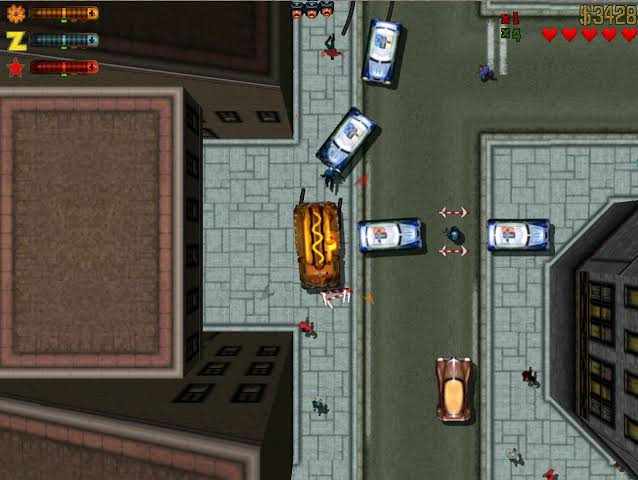
The visual presentation gives the game much of its recognizable personality. Its top-down perspective displays the city from above, allowing players to observe vehicles, pedestrians, buildings, and criminal activities within the surrounding environment. Instead of focusing on realistic character details, the design emphasizes recognizable locations and movement throughout the urban landscape. This approach makes navigation straightforward while preserving the arcade-style appearance associated with early Grand Theft Auto releases.
Anywhere City’s architecture combines traditional urban influences with futuristic elements. Streets contain different buildings, transportation routes, and environments that help distinguish the three districts. Vehicles also contribute to the visual identity through their different shapes and designs. Pedestrians and gang members create activity throughout the city, while police vehicles and emergency services introduce additional movement. Although the graphics appear dated compared with modern open-world titles, their distinctive presentation remains an important part of the game’s historical identity.
The soundtrack adds atmosphere through radio stations available while driving. Different musical selections accompany players as they move through the city, making transportation feel more engaging. Sound effects also help communicate the surrounding action, including vehicle engines, police sirens, explosions, and weapon sounds. Together, these audio elements create an immersive environment that complements the visual presentation. The combination of music, sound effects, and futuristic city design helps establish an experience that remains recognizable among classic gaming enthusiasts.
Grand Theft Auto II Development, Release, and Reception
DMA Design developed the game during the late 1990s, building on the foundation established by the original Grand Theft Auto. Rockstar Games published the sequel in 1999, continuing the franchise’s development during an important period for open-world action games. The development focused on expanding the original concept through more detailed environments, additional missions, and improved interactions with different criminal organizations. These changes helped create a more developed experience while maintaining the recognizable top-down gameplay style.
An unusual part of the game’s promotional history was GTA 2: The Movie, a live-action short film featuring Claude Speed. The promotional production introduced audiences to the game’s criminal atmosphere through a cinematic presentation. This approach was particularly interesting because video game marketing during the late 1990s relied heavily on trailers, magazine advertisements, and printed promotional material. The short film helped give the game a distinctive identity and remains an interesting part of its historical background.
Reception varied among critics and players, with attention given to its gameplay improvements, atmosphere, and overall presentation. Some players appreciated the additional freedom and gang mechanics, while others considered its visual style and gameplay limitations less impressive than newer releases. Nevertheless, its historical importance extends beyond its initial reviews. The ideas explored in the game helped develop the foundation for future Grand Theft Auto installments and contributed to the franchise’s transition toward larger, more detailed environments.
Grand Theft Auto II vs. Grand Theft Auto and GTA III
Comparing the different installments provides useful insight into the evolution of the franchise. The original Grand Theft Auto introduced the basic formula of exploring urban environments, stealing vehicles, completing criminal assignments, and interacting with law enforcement. Its top-down perspective established the visual approach that the sequel continued while expanding several gameplay systems. Players familiar with the first installment can recognize many shared elements, although the sequel introduced additional depth through its environments and gang relationships.
Grand Theft Auto II expanded the original formula with improved environmental design and a more developed reputation system. Its three districts, seven criminal organizations, and interconnected mission opportunities created additional strategic possibilities. Instead of treating every assignment as an independent activity, players needed to consider how their decisions affected relationships with competing groups. This approach helped make the game feel more dynamic and encouraged players to experiment with different mission strategies.
Grand Theft Auto III introduced a much larger transformation by moving the franchise into a fully three-dimensional world. Its third-person camera changed how players explored cities, controlled vehicles, and interacted with characters. The storytelling approach also became more cinematic, while the environment offered additional opportunities for exploration. Despite these major changes, several foundations remained recognizable, including open-world freedom, vehicle theft, criminal progression, police pursuits, and mission-based gameplay. The earlier installments therefore remain valuable for understanding how the franchise developed into its modern form.
Is Grand Theft Auto II Worth Playing in 2026?
Grand Theft Auto II can still provide an enjoyable experience for players interested in classic gaming and the history of open-world entertainment. Its straightforward mechanics, unusual futuristic setting, and independent gang reputation system offer something different from the cinematic experiences available in contemporary releases. Nostalgic players may enjoy revisiting its familiar streets, while newcomers can discover how earlier developers approached urban exploration and criminal mission design.
However, modern audiences should understand that the game reflects the technical and creative expectations of the late 1990s. Its top-down camera, older graphics, and arcade-style controls may require some adjustment for players accustomed to modern three-dimensional environments. The mission structure can also feel different because the experience places considerable emphasis on player freedom rather than extensive cinematic storytelling. Understanding these differences helps establish realistic expectations before starting the game.
Its gang reputation system remains one of its most interesting features because it introduces consequences for mission decisions. Supporting one organization can create opportunities while making relationships with rival groups more difficult. This mechanic provides additional replayability and encourages players to explore different approaches. For anyone interested in the history of Rockstar Games, classic action-adventure titles, or the development of open-world mechanics, grand theft auto ii remains a worthwhile historical experience to investigate.
Conclusion
Grand Theft Auto II represents an important chapter in the development of open-world gaming. Its fictional city, criminal organizations, mission-based progression, and distinctive top-down presentation created an experience that expanded the ideas introduced by the original Grand Theft Auto. The gang reputation system was particularly memorable because it connected mission choices with relationships throughout the fictional criminal environment.
This grand theft auto ii guide has explored the game’s history, storyline, gameplay, gangs, missions, vehicles, platforms, soundtrack, and influence on later releases. Although modern installments provide more advanced technology and cinematic presentation, the classic sequel continues to offer a recognizable experience with its own identity. Exploring its features provides a better understanding of how the Grand Theft Auto franchise developed and why its early releases remain relevant to gaming history.
Frequently Asked Questions
When was Grand Theft Auto II released?
Grand Theft Auto II was released in 1999, initially for Microsoft Windows and PlayStation, with additional platform versions arriving later.
Who developed Grand Theft Auto II?
DMA Design developed the game, while Rockstar Games published it.
Who is the main character in GTA 2?
Claude Speed is the protagonist featured in the original PC, PlayStation, and Dreamcast versions.
What city is featured in Grand Theft Auto II?
The game takes place in Anywhere City, a fictional metropolis divided into Downtown, Residential, and Industrial districts.
How many gangs are there in GTA 2?
There are seven major gangs: Zaibatsu Corporation, Loonies, Yakuza, SRS Scientists, Rednecks, Russian Mafia, and Hare Krishna.
You May Also Read: Grand Theft Auto VI PlayStation 5 Store